Indian agriculture has changed a great deal over the last few decades. Tractors are now common in many regions, but the implements behind them often decide how much value a farmer actually gets from that tractor. In this article we look at why mechanisation matters, which implement fits each stage of the season, and what to check before you buy.
The state of farm mechanisation in India
Mechanisation levels vary widely across India. States like Punjab and Haryana use tractors and implements extensively, while many smaller and hilly farms still rely on animals and manual labour. Small and marginal landholdings make it harder for every farmer to own every machine — which is why shared ownership and custom hiring are growing. Government programmes at central and state level also promote mechanisation and custom hiring centres; check with your state agriculture department for current schemes.
Why mechanisation matters: labour and timeliness
Labour shortage
Farm labour is harder to find and more expensive at peak times such as sowing and harvest. Machines let a small team cover more area.
Timeliness
In crop farming, timing is money. Wheat sown late after paddy, for example, often yields less. Implements that do more work per pass help finish operations within the right window.
Lower cost per acre
Fewer passes means less diesel, less tractor wear and fewer labour hours for the same field.
The right implement for each stage
| Stage | Job | Implement |
|---|---|---|
| Deep tillage | Break hard-pan, improve drainage | Chisel Plough or Hydraulic Reversible Plough |
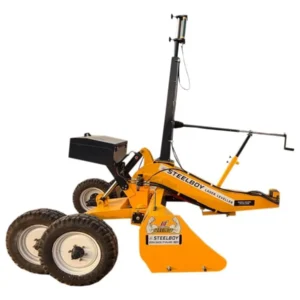
| Land levelling | Even field surface for irrigation | Laser Land Leveller |
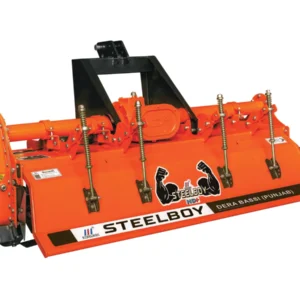
| Seedbed preparation | Fine tilth, residue mixing, puddling | Rotavators — Mini to HD Plus |
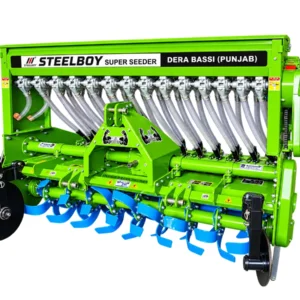
| Sowing into residue | Wheat after paddy without burning | Super Seeder |
Land preparation
Start with the soil. If water stands in the field or roots stay shallow, a deep tillage pass every few seasons breaks the hard-pan. A rotavator then prepares the seedbed — choose the size by your tractor HP.
Sowing
In rice–wheat areas, a super seeder sows wheat straight into the paddy stubble in one pass, saving time and avoiding straw burning.
Levelling
A laser-levelled field uses irrigation water more evenly, which supports uniform germination and growth. It is a once-in-a-few-years investment that pays back every season.
Matching implements to your tractor
The tractor and implement must suit each other. An implement that is too large overloads the engine, burns more diesel and wears the clutch and PTO; one that is too small leaves power unused. As a rough guide for Steelboy implements:
- 12–30 HP: Mini Series rotavators (2.5–4 ft) for orchards, vegetables and small plots.
- 35–45 HP: 5–6 ft rotavators (HD, HD Plus, Zyro, Pahalwan) and the 6 ft chisel plough.
- 45–65 HP: 7–9 ft rotavators and the 7 ft chisel plough.
- 50 HP and above: super seeders (55 HP and above for the 8 ft model).
Always check the tractor HP column in each product’s specification table, and remember that heavy or wet soil needs more power than light soil at the same width.
Custom hiring and sharing machines
Not every farmer needs to own every implement. Custom hiring centres, cooperatives and farmer producer organisations (FPOs) let farmers rent machines when needed. Many tractor owners also earn extra income by offering services such as rotavating, super seeding or laser levelling to neighbours. For a dealer or entrepreneur, a well-chosen implement range can support a strong rental business. Become a Steelboy dealer if you want to supply implements in your area.
Choosing a reliable manufacturer
- Certified quality: look for an ISO 9001-certified quality management system. Steelboy is ISO 9001:2015 certified.
- Materials: boron steel blades last longer in abrasive soils; dual cone mechanical oil seals keep water and mud out of the gearbox.
- Manufacturing: CNC laser-cut parts and precision machining mean better fit and longer life.
- Service and spare parts: check that blades, seals and parts are easy to get near you.
- Dealer network: a nearby dealer makes demonstrations, delivery and service easier.
Plan your implements around the season
| Window | Typical work | Implements |
|---|---|---|
| Before kharif (April–June) | Deep tillage, levelling, paddy puddling | Chisel / reversible plough, laser leveller, paddy-special rotavator |
| After kharif harvest (October–November) | Residue management and wheat sowing | Super seeder, rotavator |
| Before rabi or summer crops | Seedbed preparation | Rotavator — Mini for orchards and vegetables |
Planning ahead lets you service machines before the rush, book hired machines early and avoid losing days at the most important times of the year.
Good care raises the return on every machine
An implement only earns money while it is working. Simple care keeps it in the field instead of the workshop: check oil levels before each season, grease bearings and shafts regularly, replace worn blades and shovels in time, wash off mud and residue after use, and store machines under cover. Well-maintained implements also keep a better resale value.
Checklist before buying an implement
- Match the implement width to your tractor HP (check the model table).
- Think about your soil — heavy, dry, stony or wet paddy.
- Check build quality: frame, gearbox, blades, seals and finish.
- Ask for a demonstration in a field like yours.
- Confirm warranty, spare parts and service support.
- Check whether any current government scheme applies to you.
Frequently asked questions
Which implement should a new tractor owner buy first?
For most farms a rotavator matched to the tractor HP is the most used implement. Add deep tillage, a super seeder or a laser leveller based on your crops and fields.
Is custom hiring profitable?
Many tractor owners earn extra income by renting out implements in peak season. Demand depends on your area and crops.
How do I become a Steelboy dealer?
Fill in the Dealer / Distributor form on our website or call us — our team will contact you.
Explore the full Steelboy range
Rotavators, super seeders, ploughs and laser levellers — built in Punjab for every Indian farm.