
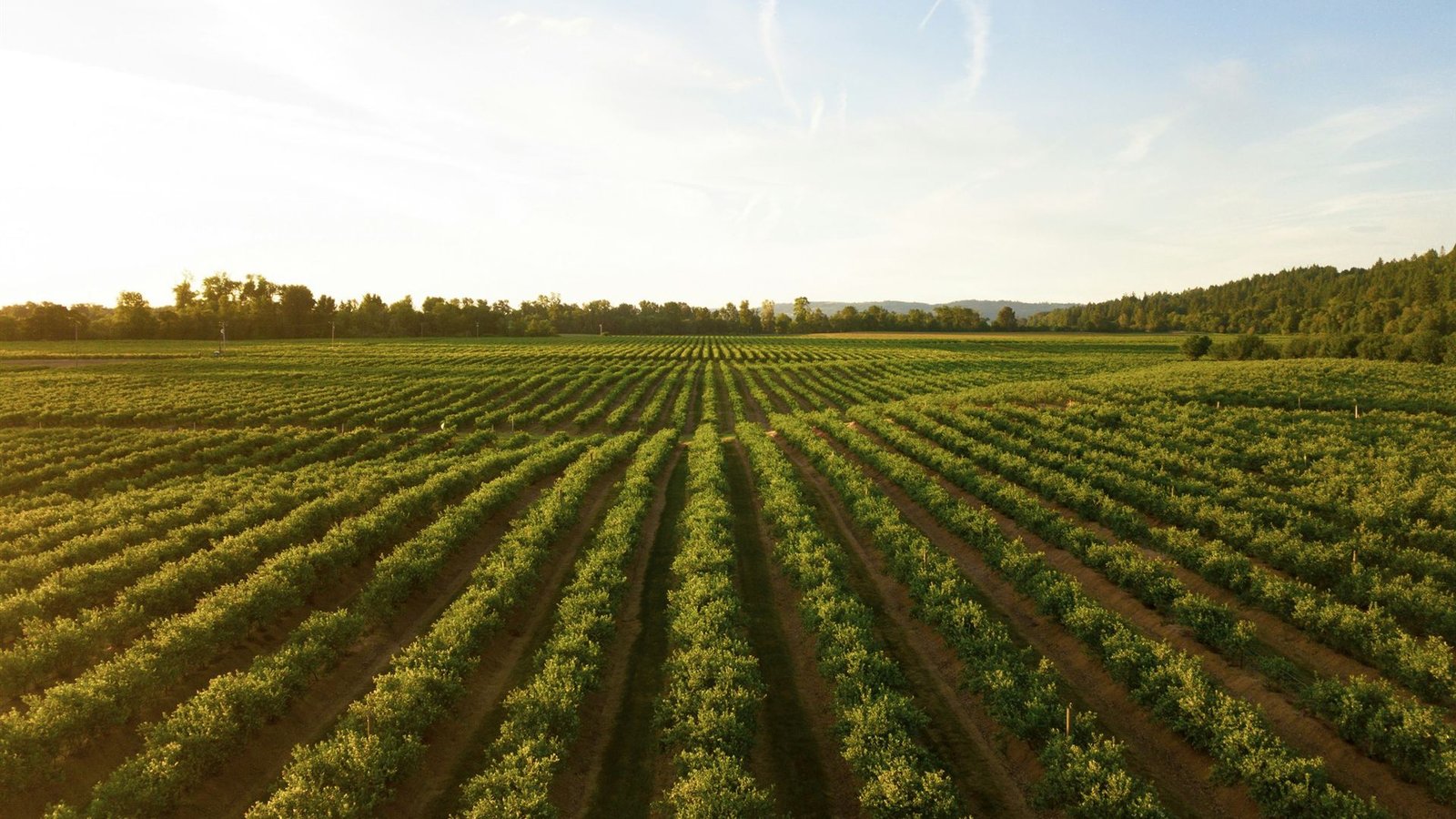
Rotavators and cultivators prepare the top few inches of soil. But years of shallow tillage, heavy tractors and wet-field puddling create a compacted layer underneath — the hard-pan. Breaking it needs a deep tillage tool. The two common choices are the chisel plough (tota panja) and the mouldboard plough, including the hydraulic reversible plough. They work very differently.
What is hard-pan and why does it hurt yield?
Hard-pan is a dense, compacted layer of soil a little below the depth of regular tillage. It forms from repeated passes at the same depth, the weight of tractors and trolleys, and puddling in paddy fields. Hard-pan:
- stops water from soaking down, so fields waterlog after rain or irrigation
- restricts roots to the shallow top layer, so crops suffer faster in dry spells
- reduces air in the root zone and limits nutrient uptake
Chisel plough (tota panja): break the pan without turning the soil
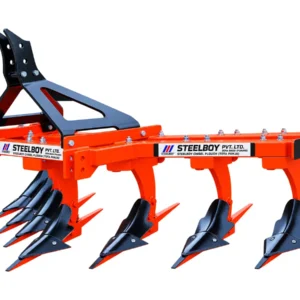
A chisel plough has heavy, rigid tynes that are pulled deep through the soil — typically 12–15 inches. The tynes shatter the hard-pan and open cracks for water and roots, but they do not turn the soil upside down. The surface residue stays mostly on top, which helps protect the soil.
Benefits
- Breaks hard-pan and compacted sub-soil
- Improves drainage and water infiltration
- Encourages deeper root growth
- Keeps topsoil and residue in place
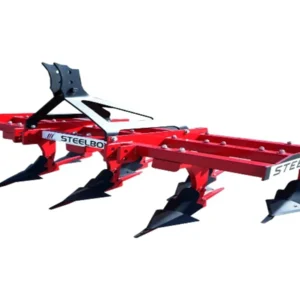
Steelboy offers the standard Chisel Plough (Tota Panja) with 5 or 7 tynes (6–7 ft, 40–60 HP), and the Aerodynamic Model Chisel Plough with a wide, streamlined box frame up to 8 ft.
Hydraulic reversible plough: full soil inversion
A mouldboard plough cuts a slice of soil and turns it completely over. Weeds, weed seeds and crop residue are buried, and fresh soil is brought to the surface. A hydraulic reversible plough has two sets of mouldboards and flips 180° at the end of every run, so all furrows are thrown in the same direction. That means no dead furrows or ridges in the middle of the field and a more level surface.
Benefits
- Full soil inversion — buries weeds and residue
- No dead furrows; fields stay level
- Faster work — no need to plough in lands
See the Steelboy Hydraulic Reversible Plough (Gujarat model) for its three frame sizes and full specifications.
Comparison
| Chisel plough | Hydraulic reversible plough | |
|---|---|---|
| Action | Shatters soil with rigid tynes | Cuts and inverts soil with mouldboards |
| Soil inversion | No | Yes, full |
| Main use | Breaking hard-pan, drainage, root growth | Burying weeds and residue, primary tillage |
| Residue | Stays mostly on the surface | Buried |
| Field after | Rough, needs a rotavator pass | Level, no dead furrows; needs seedbed preparation |
How often should you deep-till?
Deep tillage is not needed every season. Many farmers chisel-plough every two to three years, or when they notice waterlogging, shallow roots or a hard layer when digging. A simple test: push a steel rod into moist soil — if it suddenly becomes hard to push a few inches below the tilled layer, you have found the pan. After deep tillage, prepare the seedbed with a rotavator.
Which one does your farm need?
Choose a chisel plough if water stands in your field after irrigation or rain, if roots stay shallow, or if you have found a hard layer when digging. It is also the better choice when you want to keep crop residue on the surface to protect the soil.
Choose a hydraulic reversible plough if weeds and weed seeds are a growing problem, if you need to bury heavy residue, or if you are bringing fallow or grassy land back into cultivation. It is also popular where farmers want a clean, level field without the dead furrows a fixed plough leaves behind.
Many larger farms and custom hiring centres keep both: the chisel plough for regular hard-pan breaking, and the reversible plough for occasional full inversion when weeds build up.
Choosing the right size for your tractor
Deep tillage needs pulling power. As a starting point for Steelboy chisel ploughs:
| Model | Frame | Tynes | Tractor HP |
|---|---|---|---|
| SCH-335 | 6 ft | 5 | 40–45 HP |
| SCH-440 | 7 ft | 7 | 50–60 HP |
| SCHAER-350 (Aerodynamic) | 6 ft | 5 | Ask us |
| SCHAER-440 (Aerodynamic) | 8 ft | 7 | Ask us |
Heavier, drier soil needs more power at the same width. If your tractor struggles, reduce the working depth slightly or choose the smaller model.
Field tips for deep tillage
- Soil moisture: chisel ploughing works best when the soil is dry enough to shatter, not so wet that it smears.
- Stones and roots: walk the field first and remove large stones that can damage tynes and shovels.
- Depth: set the depth just below the hard layer — going deeper than needed only uses more diesel.
- Speed: keep a steady speed; very high speed throws soil and increases wear.
- Follow-up: after deep tillage, level badly uneven areas and prepare the seedbed with a rotavator.
Aerodynamic vs standard chisel plough
Both break hard-pan to 12–15 inches with 34 mm tynes. The standard Tota Panja comes in 6 ft (5 tynes) and 7 ft (7 tynes). The Aerodynamic model has a wider, streamlined box frame that lets soil flow smoothly around the tynes for stable pulling, and is available up to 8 ft for larger tractors.
Frequently asked questions
Does a chisel plough turn the soil over?
No. A chisel plough breaks and loosens the soil deep down without inverting it. A mouldboard or reversible plough turns the soil over.
What is the working depth of a Steelboy chisel plough?
Steelboy chisel ploughs work at 12–15 inches depth.
Why choose a reversible plough over a fixed mouldboard plough?
A reversible plough flips at the end of each run so all furrows face one way — no dead furrows and a more level field.
Need help choosing a plough?
Tell us your soil and tractor HP — we will suggest the right deep tillage tool.
Related Steelboy products
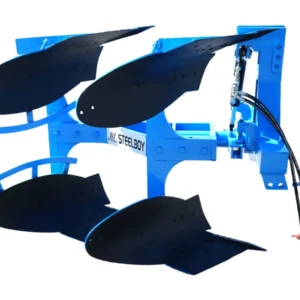
Hydraulic Reversible Plough (Gujarat Model)
3 models · 25 inch working width · Hydraulic 180° reversal