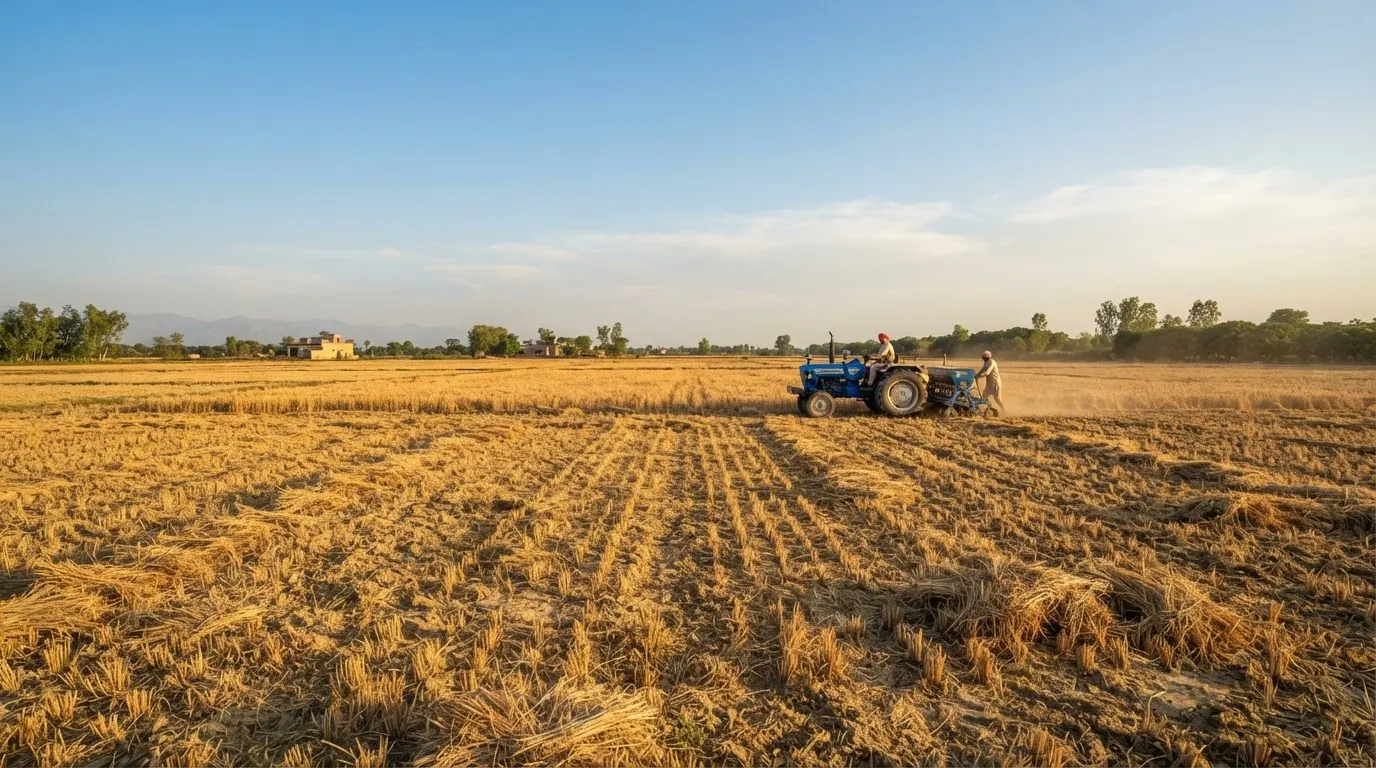
Every October and November, farmers across Punjab and Haryana face the same problem: the paddy is harvested, the wheat must be sown on time, and the field is covered in straw. Burning the straw (parali) looks like the quickest way out — but it damages the soil, pollutes the air and harms health. The super seeder offers a practical alternative: it sows wheat directly into the standing stubble in a single pass.
The problem with burning paddy straw
Soil
Burning destroys organic matter and the useful organisms in the top layer of soil. Over time, fields lose the natural fertility that straw could have returned.
Air and health
Smoke from burning fields adds to air pollution across the region, affecting people in villages and cities alike — especially children, the elderly and people with breathing problems.
Lost nutrients
Paddy straw contains nutrients and carbon. When it is burnt, most of that value goes up in smoke instead of feeding the next crop.
How a super seeder works
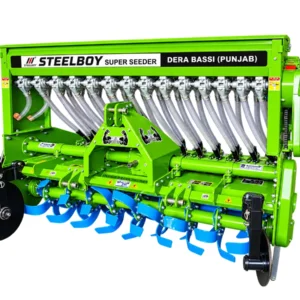
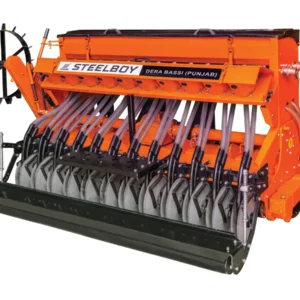
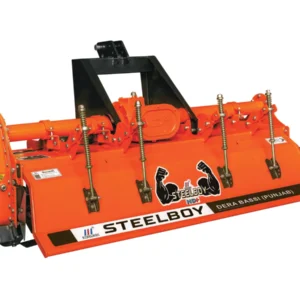
A super seeder combines a rotary tiller with a seed drill. As the tractor moves forward:
- The rotor blades cut the standing stubble and loose straw and mix it into the topsoil.
- The seed drill feeder meters the wheat seed.
- Disc openers place the seed into the soil at an even depth.
- A roller or trailing board presses and levels the surface behind.
All of this happens in one pass, so the field goes from harvested paddy to sown wheat without burning and without separate tillage passes. The Steelboy Super Seeder uses a multi-speed gearbox, 54 LJF boron steel blades and dual cone mechanical oil seals.
Benefits of using a super seeder
- No stubble burning: the straw is mixed into the soil instead of burnt.
- Timely wheat sowing: one pass replaces several, which helps sow wheat within the right window.
- Moisture conservation: sowing straight after harvest uses the moisture already in the field, and the residue layer helps reduce evaporation.
- Organic matter: straw mixed into the soil breaks down and adds organic matter over time.
- Fewer passes: less tractor time, less diesel and less labour for field preparation.
Tractor HP needed
Because it tills and sows at the same time, a super seeder needs a strong tractor. Steelboy models are rated as follows:
| Model | Working width | Tractor HP | Weight (approx) |
|---|---|---|---|
| SS54 – 7 ft | 200 cm | 50 HP & above | 1000 kg |
| SS60 – 8 ft | 225 cm | 55 HP & above | 1050 kg |
If you want to sow other crops or apply fertilizer at the same time, look at the Super Seeder with Multicrop Attachment, which has separate seed and fertilizer boxes and adjustable seed rates.
Field tips for best results
Soil moisture
Sow when the soil has adequate moisture — neither too wet (the rotor will smear and clog) nor too dry (poor germination). Many farmers sow soon after the paddy harvest to use residual moisture.
Straw spread
Spread loose straw evenly. Heaps of straw from the combine can choke the machine; a straw spreader on the combine helps.
Speed
Drive at a steady, moderate speed so the rotor can mix residue properly and seed is placed at an even depth.
Seed rate and depth
Calibrate the seed rate before starting and check the sowing depth in the first few metres. Adjust as needed for your seed variety.
Common problems and simple fixes
| Problem | Likely cause | What to do |
|---|---|---|
| Machine clogs with straw | Heaps of straw, or soil too wet | Spread straw evenly; wait for the field to drain; slow down |
| Uneven sowing depth | Depth not set, uneven field | Adjust depth and check the first rows; level badly uneven fields |
| Poor germination in patches | Dry soil or seed in straw pockets | Sow with adequate moisture; improve straw spreading |
| Seed rate different from target | Metering not calibrated | Calibrate the seed drill for your seed before starting |
Looking after your super seeder
A super seeder works hard for a few intense weeks every year, so good care before and after the season pays off.
- Before the season, check gearbox and side-gear oil, blades and bolts, seed tubes and disc openers.
- Grease bearings and the PTO shaft regularly during use.
- Clean out the seed and fertilizer boxes after every day — leftover fertilizer absorbs moisture and corrodes metal.
- At the end of the season, wash off soil and straw, replace worn blades and store the machine under cover.
Is a super seeder right for my farm?
A super seeder makes the most sense in rice–wheat systems where the gap between harvest and sowing is short, and where you have a tractor of 50 HP or more. If your own tractor is smaller, or you farm a small area, consider hiring from a custom hiring centre or sharing a machine with neighbours. Many tractor owners with a super seeder also earn income by sowing for other farmers during the season.
Government support
Central and state governments run crop residue management (CRM) schemes that may support the purchase of in-situ residue management machines such as super seeders, for individual farmers, cooperatives and custom hiring centres. Eligibility and amounts change from year to year, so please check the current scheme with your state agriculture department or local Krishi Vigyan Kendra before buying.
Frequently asked questions
Can I sow wheat with a super seeder right after the combine?
Yes — that is what it is designed for. Make sure loose straw is spread evenly and the soil has adequate moisture.
What tractor do I need for a super seeder?
The Steelboy SS54 (7 ft) needs 50 HP and above, and the SS60 (8 ft) needs 55 HP and above.
Is there a subsidy on super seeders?
Crop residue management schemes may support these machines. Check the current scheme and eligibility with your state agriculture department.
Planning for wheat sowing?
Ask us about the Steelboy Super Seeder and which model suits your tractor.